One State of the Union, Two Parties, One Winning Issue: Lower Drug Prices
By ALDP Co-Founders Michael Glassner and Jason Young
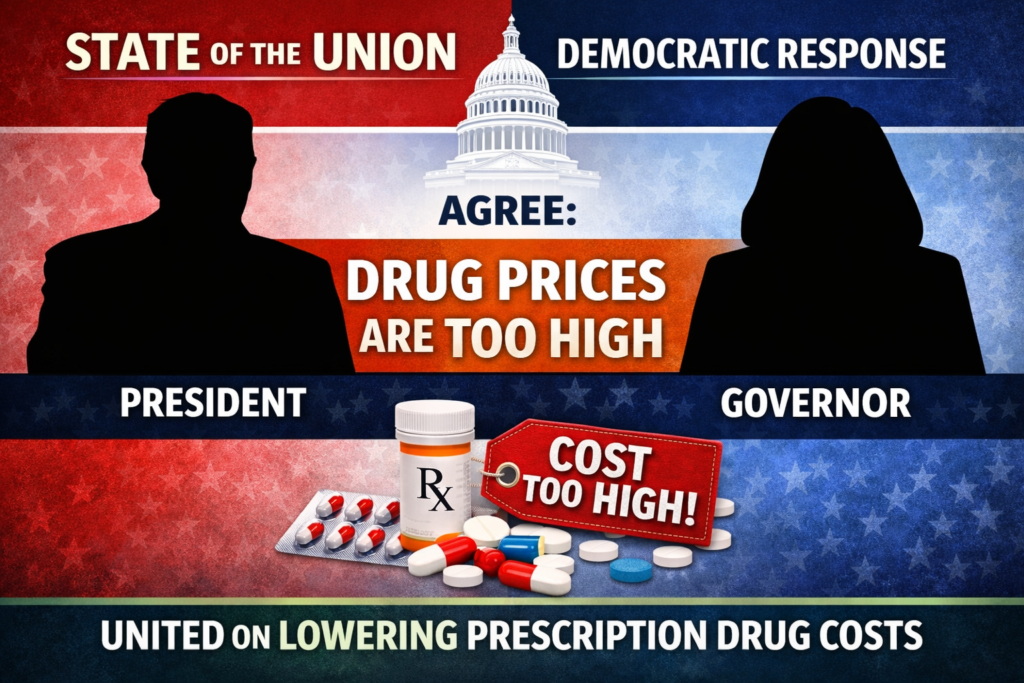
Americans watched two very different political leaders take the national stage tonight: President Trump delivering the State of the Union, and Virginia Governor Abigail Spanberger offering the Democratic response. We heard something that doesn’t happen often enough in Washington: bipartisan agreement that prescription drug prices are too high.
On that much, both sides are right. And tonight, both leaders showed they mean it.
What the President Said
President Trump used tonight’s address to claim credit for his administration’s drug pricing actions – including his Most Favored Nation (MFN) pricing framework, deals with pharmaceutical manufacturers, and TrumpRx, a lower-price direct-to-consumer purchasing platform.
In his own words: “…Under my just-enacted Most Favored Nation agreements, Americans, who have for decades paid by far the highest prices of any nation anywhere in the world for prescription drugs, will now pay the lowest price anywhere in the world for drugs anywhere – the lowest price.”
Let’s be direct: in his first year back in office, President Trump has moved faster and more aggressively on prescription drug pricing than most observers expected. The President’s MFN approach ties what Americans pay to what other wealthy countries pay for the same drugs, and it reflects a fundamentally sound premise that we at ALDP have long supported: Americans should not subsidize the world’s drug supply. We simply can’t afford it, as every patient we talk to tells us.
Deals with more than a dozen manufacturers, expanded Medicare coverage for GLP-1 medications, and a direct-to-consumer platform represent genuine action, not just rhetoric. Republicans who said their party would take on Big Pharma now have something real to point to.
That said, independent experts have been clear-eyed about the limits of what’s been announced so far. Americans still pay two to three times what other nations pay for brand-name medicines. As the Trump Administration’s policies and programs are currently structured, too many Americans won’t notice a difference at the pharmacy counter. The details of the manufacturer agreements remain confidential, meaning the White House is asking voters to take the results on faith. We’re watching for receipts.
President Trump has shown he’s willing to fight, and he has a lot of time to deliver for the midterms and beyond.
What Governor Spanberger Said
Governor Spanberger offered a different narrative. In her own words: “Costs are too high – in housing health care, energy, and childcare. …In the most innovative and exceptional nation in the history of the world, Americans deserve to know that their leaders are focused on addressing the problems that keep them up at night… whether you have to skip a prescription in order to buy groceries… We are working to lower costs.”
What Governor Spanberger represents in Virginia is more than a policy position; it’s a break from the recent past. Her predecessor vetoed a Prescription Drug Affordability Board bill twice, but she has said she’ll sign it. That matters enormously. PDABs are among the most effective tools states have to put real, binding downward pressure on what patients and payers actually shell out for the most expensive drugs. Virginia’s patients have waited years for this. Their wait is nearly over.
What Both Got Right, and What Remains Unfinished
Tonight was a good night for the drug pricing cause. When the President of the United States and a leading voice of the opposition party both stand up on national television and say that drug prices are too high and that they’ve taken steps toward greater affordability, it confirms what patients have been saying for years. This is not a partisan problem. It is an American one. And we are beginning to find American solutions.
But speeches are not solutions. Action is.
Here’s what the political calendar looks like right now: 42 state legislatures are currently in session. Only New Mexico has concluded its work for the year. Arkansas and Louisiana have yet to gavel in. That means the vast majority of states still have a live opportunity to act – to pass legislation that creates or strengthens Prescription Drug Affordability Boards, resists industry pressure to weaken existing consumer protections, and delivers real relief to constituents before the 2026 elections arrive.
The midterms are not here yet. There is still time.
Both parties have told voters tonight that they are fighting for them on drug prices. Tonight, our eyes were on the President in the House Chamber. But the 44 legislatures with legislative time left in 2026 is another important stage. Voters are watching. Both parties have the time and the incentives to deliver relief. We believe the victory will go to all those legislators willing to hold the line against pharmaceutical industry lobbying and pass reforms that patients will actually feel.
As we’ve said repeatedly: The Price Is The Problem. Voters will notice if their bills come down. They will also notice if they don’t.