A Conservative Court Just Backed Drug Price Accountability
By ALDP Co-Founders Michael Glassner and Jason Young
For years, some of the world’s largest drug companies tried to use the courts to stop Medicare from negotiating drug prices. Today, the Supreme Court said no – to all of them.
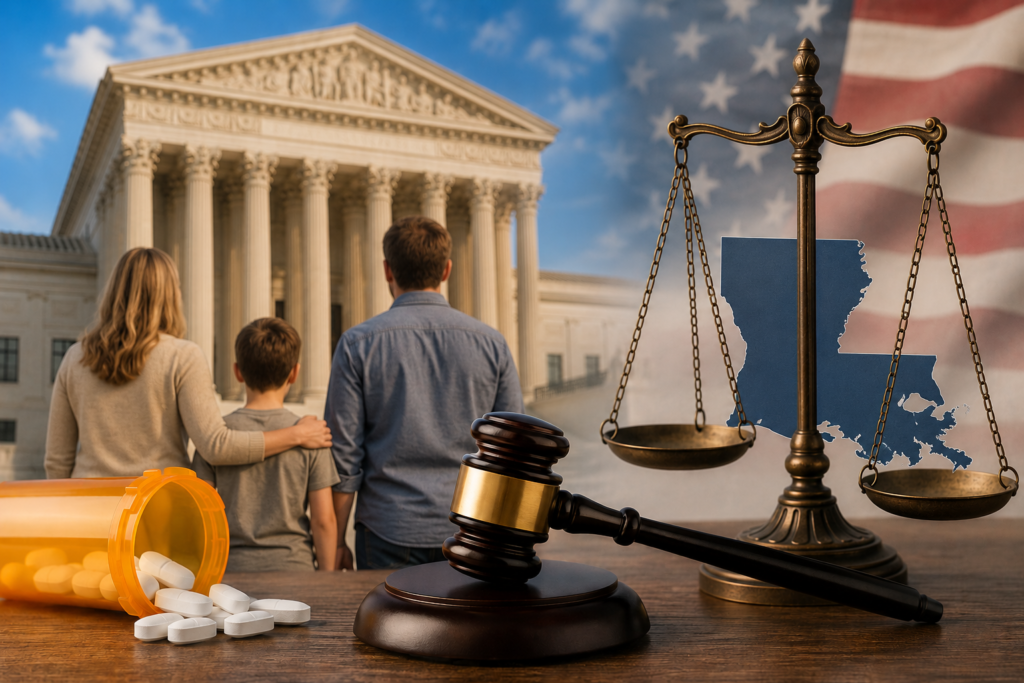
The justices declined to hear challenges to the Medicare Drug Price Negotiation Program brought by AstraZeneca, Boehringer Ingelheim, Bristol Myers Squibb, Janssen, Novartis, and Novo Nordisk. The Court offered no explanation, as it rarely does when declining to take a case. But the practical result is clear: the lower court rulings that rejected those challenges stand. The negotiation program stands.
This is worth pausing on. The program being defended was enacted in 2022. But the administration defending it in court – and citing it as part of its own drug pricing agenda – is Trump’s. CMS Administrator Dr. Mehmet Oz has highlighted the negotiation program as part of the administration’s efforts to lower prescription drug costs. The Supreme Court, with its strong conservative majority, declined to disturb it. This is not a partisan story. It is a story about accountability – one that has held up across administrations and across the ideological spectrum of the federal judiciary.
The pharmaceutical companies whose cases were denied brought more than 20 lawsuits against the negotiation program in total. They made every argument available – Fifth Amendment takings, First Amendment compelled speech, separation of powers violations. District courts rejected them. Appeals courts rejected them. And now the Supreme Court has declined to rescue them.
A note on nuance, because credibility requires it: the industry did not go entirely winless in the lower courts. The Fifth Circuit gave drugmakers a procedural foothold in one case – the only meaningful win in an otherwise comprehensive series of defeats. Cases are still working through the lower courts, and the industry’s legal campaign isn’t finished. But the Supreme Court’s decision to pass on these six petitions makes every remaining challenge significantly harder to sustain.
For patients – particularly seniors – this matters in a concrete way. Negotiated prices for the first group of drugs are already in effect under Medicare Part D. Seniors are seeing savings. As the program expands in the years ahead, seniors who rely on other high-cost drugs will benefit, widening who gets relief.
STATE-DRIVEN ACCOUNTABILITY
But federal action, as important as it is, only reaches so far. Medicare negotiated prices apply to seniors on Medicare. They don’t help a 37-year-old mother on a high-deductible plan. They don’t help an uninsured worker who needs a blood thinner he can’t afford. They don’t help rural families already stretching to cover medical necessities, compounded by the time and transportation costs to get those medicines.
States can change that. And some already are. Louisiana – a conservative state, governed and legislated by conservatives – is working hard to create a Prescription Drug Affordability Board (PDAB). Its bill, SB 401, passed unanimously out of the Senate, and will soon be on the House floor. While state PDABs are not the Medicare negotiation program, they reflect the same underlying principle: drug prices should not be immune from public scrutiny and accountability. Louisiana’s PDAB would extend the principle to all uninsured and working-age Louisianans, not just Medicare beneficiaries in the state.
Nearly a dozen states have already established PDABs, which are independent bodies that review drug prices and highlight the plights of state residents, small businesses, and taxpayers that find themselves squeezed by those prices. In some instances, like in Colorado, a state’s PDAB has additional authority and can set limits on what purchasers in the state pay. These states are joining a growing and already loud chorus – one whose bipartisan voices include the past and current president, Congress, and today, the Supreme Court. What’s been missing is the political will to push back on prices that no market mechanism has managed to check.
Today’s decision doesn’t just close a legal chapter. It confirms what the lower courts, the Trump administration, and state legislatures in both parties have already recognized: holding drug manufacturers accountable is constitutional, achievable, and politically popular. A conservative court, a conservative state – pointing in the same direction. Seven out of eight Americans agree. Bipartisan agreement on the need for drug price accountability has arrived, and there’s no turning back.
For years, opponents argued that meaningful drug price accountability was politically impossible, legally dubious, or both. Today’s decision further weakens that argument. States that want to act now have a clearer path forward – and no excuse not to.