Chemotherapy Deserts: Where Did the Care Go? (Part 1 of 2)
By ALDP Co-Founders Michael Glassner and Jason Young
The night before her chemotherapy, Herlinda Sanchez sets out her clothes and checks that she has everything she needs: a blanket, medications, an iPad, a Bible, fuzzy socks, and snacks for the road.
Then she and her husband set an alarm for 4 a.m.
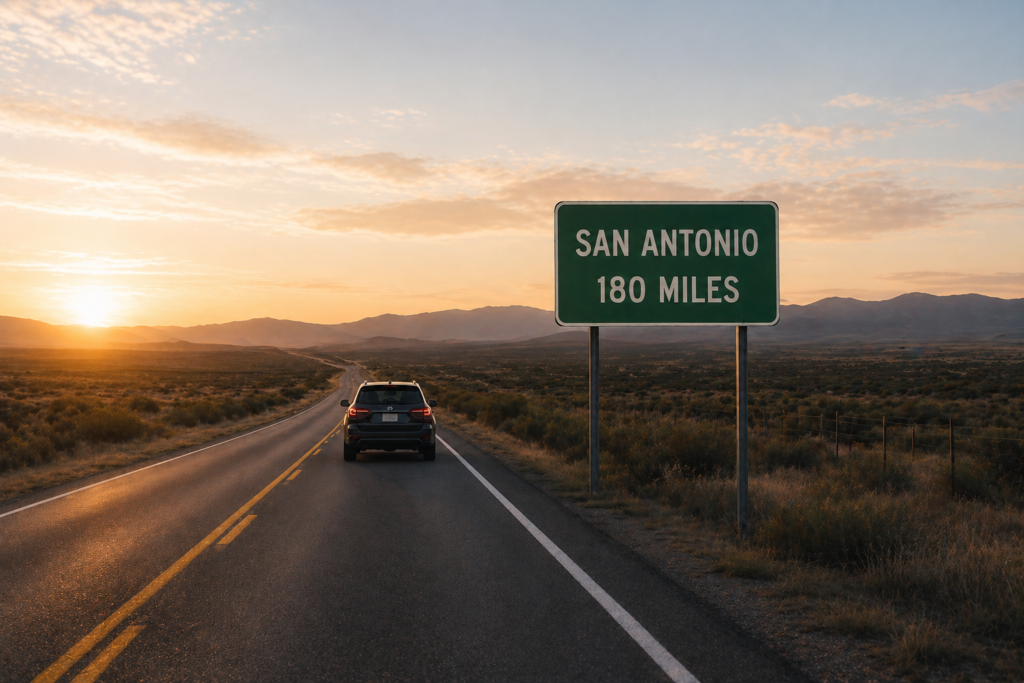
Sanchez had to develop this routine because there are no cancer services in Del Rio, Texas, the town of 35,000 where she lives. After being diagnosed with stage 3 breast cancer, she learned she would have to drive nearly three hours each way to San Antonio for treatment, stopping on the dark road to eat fast food in the car before each appointment.
Herlinda Sanchez’s story was reported by Charlotte Huff for KFF Health News. But as Huff’s reporting makes clear, it isn’t unusual. Across rural America, patients facing a cancer diagnosis confront a second devastating reality: the treatment they need may not exist anywhere near their home.
Nearly a Quarter of Rural Hospitals Have Stopped Offering Chemotherapy
The numbers are staggering. According to research from the Chartis Center for Rural Health, 448 rural hospitals stopped offering chemotherapy services between 2014 and 2024 – nearly a quarter of all rural hospitals that once provided it. And the trend line is moving in only one direction. These closures reflect a mix of pressures – workforce shortages, payer mix, and thin margins – but high drug costs are increasingly central to whether these programs can operate at all.
Today, approximately 20% of rural Americans live more than 60 miles from a medical oncologist. The worst-hit states follow a clear pattern. Mississippi has lost more than half of its rural chemotherapy hospitals. Texas lost 60 facilities – the largest absolute number in the country. Tennessee has lost 43% of its rural chemotherapy hospitals. Thinner hospital margins and higher rates of uninsured patients have translated into fewer resources to sustain complex care.
The Distance Itself Causes Harm
This isn’t an abstract policy problem. Rural cancer patients die from their disease at a 9% higher rate than their urban counterparts. While multiple factors contribute, access to timely treatment is one of the clearest and most actionable drivers.
Research shows that travel distance is associated with later-stage diagnosis, lower rates of receiving standard chemotherapy and radiation, and worse five-year survival. Cancer infusions can last eight hours. Add a three-hour drive each way, and you’re asking a seriously ill person to spend a full day in transit for a single treatment – often multiple times a week, for months.
It takes no imagination to think through what it means to feel that sick, make that commute, and do it several times a week. We don’t have to imagine it because the patients we work with have told us directly.
The cruelest finding in the data: when rural cancer patients are enrolled in clinical trials, their outcomes essentially match those of urban patients. The mortality gap is not about rural biology. It’s about rural access. It is a man-made problem, which means it is a solvable one.
We are Americans for Lower Drug Prices, and we want to be precise about what that means in this context. This is not a story about geography alone. Rural hospitals, clinics, and pharmacies are not closing, or are not closing cancer-focused programs and services, because they lack compassion or competence. They are closing them because the economics of running those programs have broken down – and drug pricing is a central driver of that breakdown. The same prescription drug pricing failures that make medications unaffordable for individual patients are making entire care services unsustainable for the communities that need them most.
In Part Two, we look closely at those economics – what has happened to the price of cancer drugs, what that means for a small rural hospital trying to keep its infusion unit open, and why lowering drug prices is inseparable from the fight to keep care accessible in rural America.