Louisiana Just Voted 5-0 to See the Truth About Drug Prices
By ALDP Co-Founder Jason Young
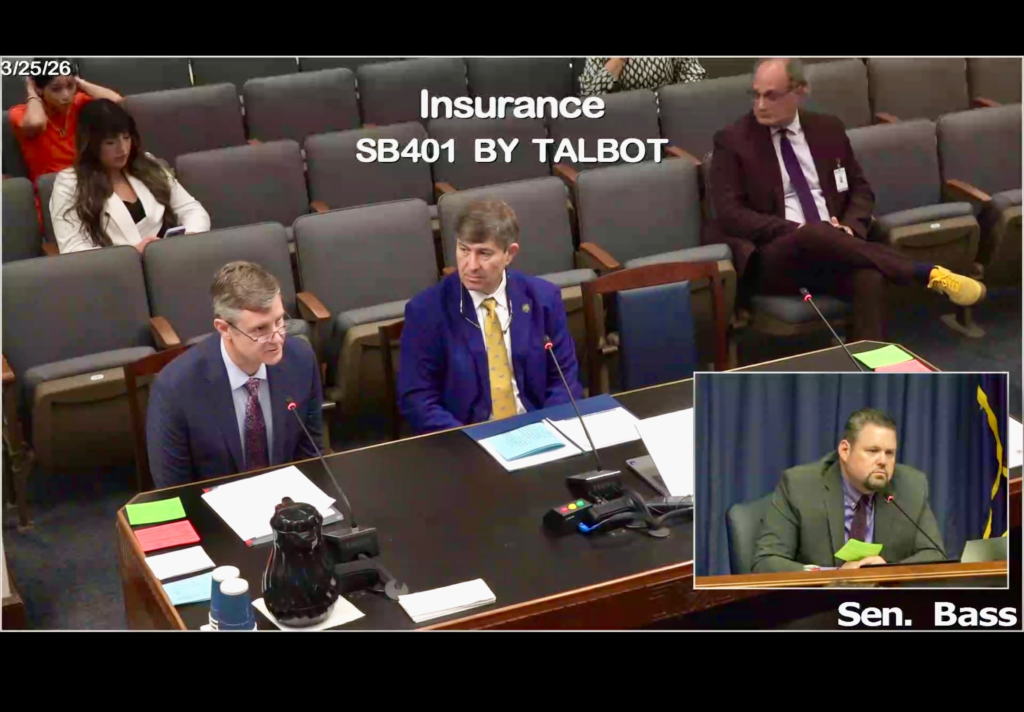
The Louisiana Senate Committee on Insurance voted unanimously today – 5 to 0 – to advance SB 401, a Prescription Drug Affordability Board bill authored by Senator Talbot. The vote sends the bill to the full Senate floor with momentum and a clear bipartisan signal: Louisiana wants to know what its residents are actually paying for prescription drugs, and why.
This is a transparency bill. SB 401 doesn’t set prices, and it doesn’t mandate outcomes. Instead, it creates the infrastructure for accountability: reporting requirements, data collection, and the foundation of any serious effort to understand what Louisianans are actually paying and why. As I said in testimony before the committee last week: you can’t fix what you can’t see.
PhRMA, the pharmaceutical industry’s trade association, testified in opposition today. Their representative made arguments that were familiar, polished, and striking in what they left out entirely.
What PhRMA never mentioned, in its entire testimony, was a single word about Louisiana’s more than 300,000 uninsured residents. For the uninsured Louisianan who walks into a pharmacy, the manufacturer’s list price is the price. No rebate, no negotiation, no one else to blame. Just a number a pharmaceutical company set unilaterally, with no public justification and no accountability to anyone.
At its core, this is one of the most important constituencies for SB 401. These aren’t folks to be erased, because they are the people most in need of help.
Maryland created the first PDAB in the country, in 2019. PhRMA said today Maryland’s PDAB has reported no savings, but it didn’t mention that Maryland’s board was deliberately constrained. SB 401 doesn’t even go that far; it is a transparency and reporting board only. PhRMA opposed a bill that can’t do the one thing they claim boards fail at.
Americans for Lower Drug Prices testified in support of SB 401 at the committee’s first hearing on the bill. Here is what I told the committee (remarks as prepared):
Acting Chairman Bass, Chairman Talbot, members of the committee – thank you for the opportunity to testify today.
My name is Jason Young. I’m co-founder of Americans for Lower Drug Prices, a bipartisan nonprofit I founded with Michael Glassner, who served as COO of President Trump’s 2020 presidential campaign.
I got involved because one of my closest friends simply couldn’t afford the $2,000-a-month prescription drug he needed to prevent a stroke.
Michael joined me in this effort because he had traveled the country on all three of President Trump’s campaigns. People pulled him and Mr. Trump aside, pleading for something to be done about skyrocketing drug costs. I have no doubt the members of this committee have heard those stories and pleas, too.
I want to be direct about who we are: ALDP has board-passed policy that strictly prohibits us from working with the pharmaceutical industry, PBMs, pharmacies, or anyone else with a financial stake in today’s drug price system. Our only interest is the patient.
We strongly support SB 401.
This bill is about transparency. It is about Louisiana knowing its own situation.
SB 401 doesn’t set prices. It doesn’t mandate outcomes. It creates the infrastructure for accountability – reporting requirements, data collection, the foundation of any serious effort to understand what Louisianans are actually paying and why. You can’t fix what you can’t see.
ALDP commissioned a statewide survey of 600 likely Louisiana voters earlier this month. The results are unambiguous.
Nearly three in four Louisiana voters call the cost of prescription drugs a serious problem. Eighty-six percent say state action on drug costs is important. And 68% say the state should play a role in reviewing and limiting drug costs – compared to just 12% who believe prices should be left to the market. That is not a partisan number. Republicans support state action at 61%.
Industry will tell you the data is already public. That is not the point. What exists publicly is financial data scattered across SEC filings and industry reports. What does not exist anywhere is a systematic picture of Louisianans’ problems affording their needed medications. If Pharma has such data, they should publish it immediately. And if they don’t, it’s data that we should all want and need. Who is immune from a neighbor’s struggles? None of us should be.
Let me address the pharmaceutical industry’s arguments directly.
They will point fingers at every other actor in the drug supply chain: insurers, PBMs, and hospitals. And let me be clear: every one of those actors needs accountability and discipline. Every one of them. We are not here to defend any of them.
But today we are here to talk about the origin point – the place where the price is born – and that is the manufacturer. As my Mississippi grandmother would have said: let’s “begin at the beginning.”
The beginning, in the United States, is when the manufacturer sets that number – unilaterally, without a public justification, without negotiation, and without accountability. Everyone downstream is negotiating over the consequences of their decision. That is where we begin.
They will say this bill threatens innovation. That argument has been made in every state where any drug pricing reform has been attempted, and it has never been substantiated. Every peer nation – Germany, Japan, Canada, the United Kingdom – has mechanisms to review and check drug prices. They also have functioning pharmaceutical markets and robust innovation. Their patients are not rationing their medications like Louisianans are. The innovation argument feels more protective of profit margins than it does of patients.
They will say this is government price control. It is not. It is public transparency – the same accountability we build into banks, food manufacturers, and employers. Drug manufacturers are the extraordinary exception: the one industry that sets prices affecting life and death with no requirement to justify those prices to anyone. That is not a free market. It is a privilege. And privilege comes with accountability.
President Trump has proven the premise. The President launched TrumpRx and secured Most Favored Nation agreements with at least 15 pharmaceutical companies, aligning U.S. drug prices with the lower rates other countries pay. The result: discounts of 50, 70, or even 90% off list price on dozens of medications. Wegovy went from $1,349 to $149 a month. If a manufacturer can sell at that price and still agree to the deal, what does that tell you about the original $1,349? It was not the cost of the drug. It was the cost of having no one at the table pushing back.
We applaud the President for taking on skyrocketing drug prices. And now it’s time for states to follow his lead – as laboratories of innovation, as partners, and as advocates for the patients, taxpayers, and small businesses.
And there is urgency. The TrumpRx agreements appear to carry three-year terms, based on manufacturer disclosures in earnings calls and securities filings. That means prices on those drugs could snap back as early as 2028 or 2029. A patient who builds a treatment plan around an affordable medication and then loses access when the voluntary agreement expires is not a solved problem – it is an oasis.
Louisiana has roughly one to two legislative cycles to build infrastructure that endures. The window the President opened will not stay open forever.
SB 401 is the right first step – transparent, measured, and grounded in the principle that accountability is not the enemy of a functioning market. It is what makes markets function.
The patients and small business owners we hear from are only asking to be seen. I urge your support of a bill that will illuminate what they’re experiencing.
What Comes Next
Today’s unanimous vote is a signal, not a finish line. SB 401 now moves to the full Senate, where the same industry arguments will be made again. Louisianans who have struggled to afford their medications, or know someone who has, should make their voices heard.
The committee voted 5 to 0 to see the truth. Now the full Senate has to decide if Louisiana deserves to know it.